An honest guide · updated 2026

Bitcoin Mixers —
privacy on a public ledger.

Every Bitcoin transaction lives on a ledger anyone can read, forever. A Bitcoin mixer — also called a tumbler, blender, or crypto mixer — is one of the few tools that pushes back against that. This guide explains what a Bitcoin mixer actually does, how the main types work, and what to think about (legally and practically) before using one.

~10 min
read time
0
affiliate links
2 models
covered: custodial & CoinJoin
01

What is a Bitcoin mixer?

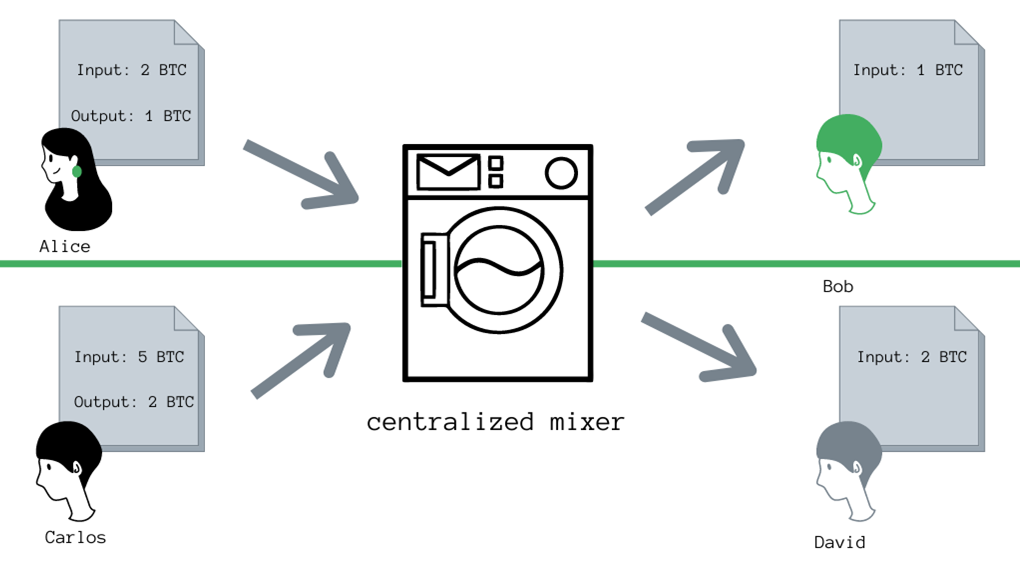
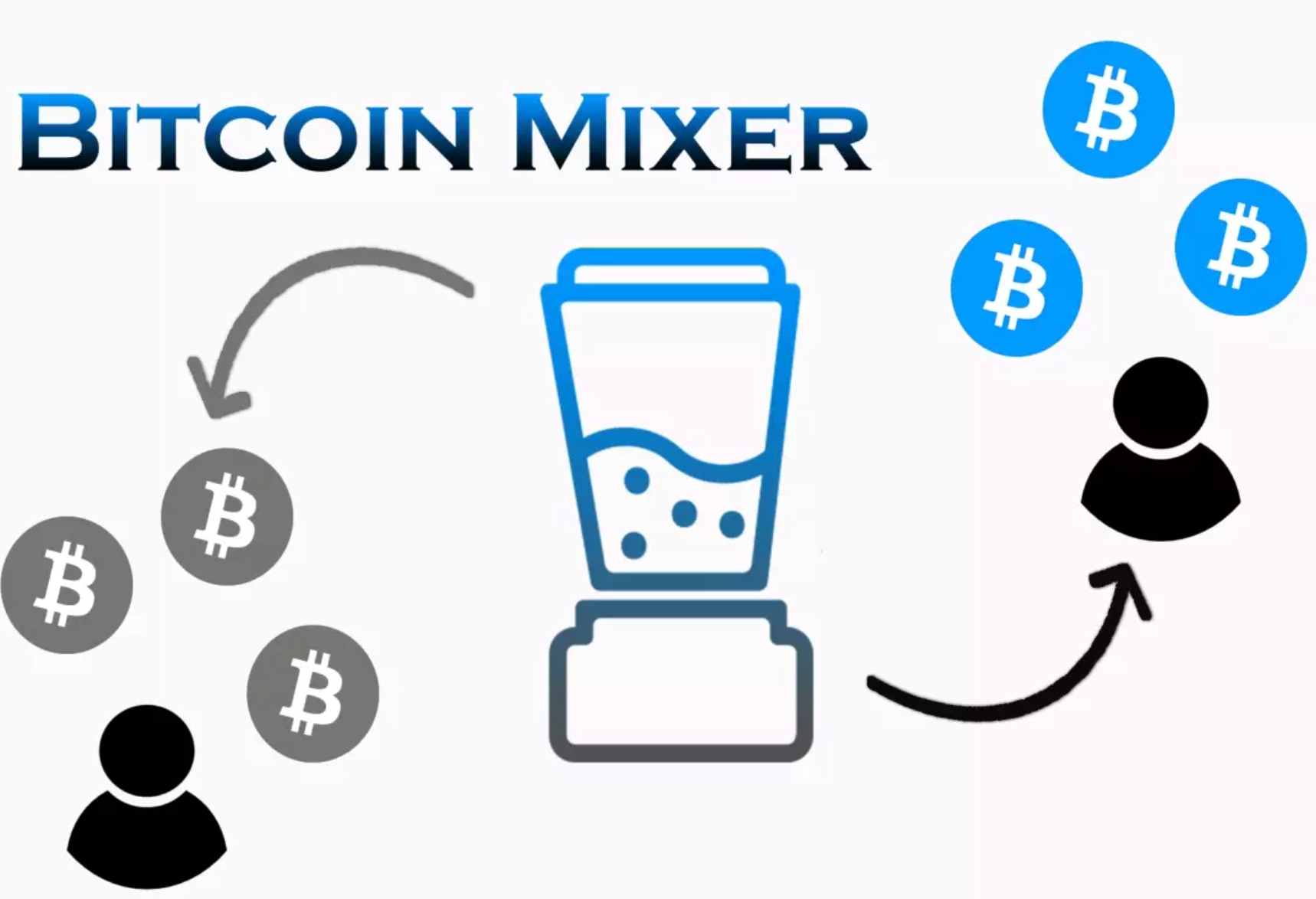
A Bitcoin mixer is a service that pools coins from many users and pays each person back from a different source. Coins came in from address A. Different coins go out to address B. The straight line from your old wallet to your new one is gone.

Some BTC mixers run as centralized services where a single operator briefly holds your funds. Others use a protocol called CoinJoin, where users coordinate to combine their transactions into one batched payment without ever handing custody to anyone. The end result rhymes — a much weaker link between sender and receiver — but the trust models are not the same thing.

The reason any of this exists is structural. Bitcoin's ledger is public on purpose, by design. Once someone connects one of your addresses to your real-world identity — through an exchange, a payment, a tweet — they can read backwards and forwards through every transaction tied to that wallet. A Bitcoin mixer is one of the few tools people reach for to push back against that.

Bitcoin mixer dashboard interface showing transaction inputs and outputs
fig.02 · typical Crypto mixer interface — inputs, outputs, delay settings
02

How does a BTC mixer work?

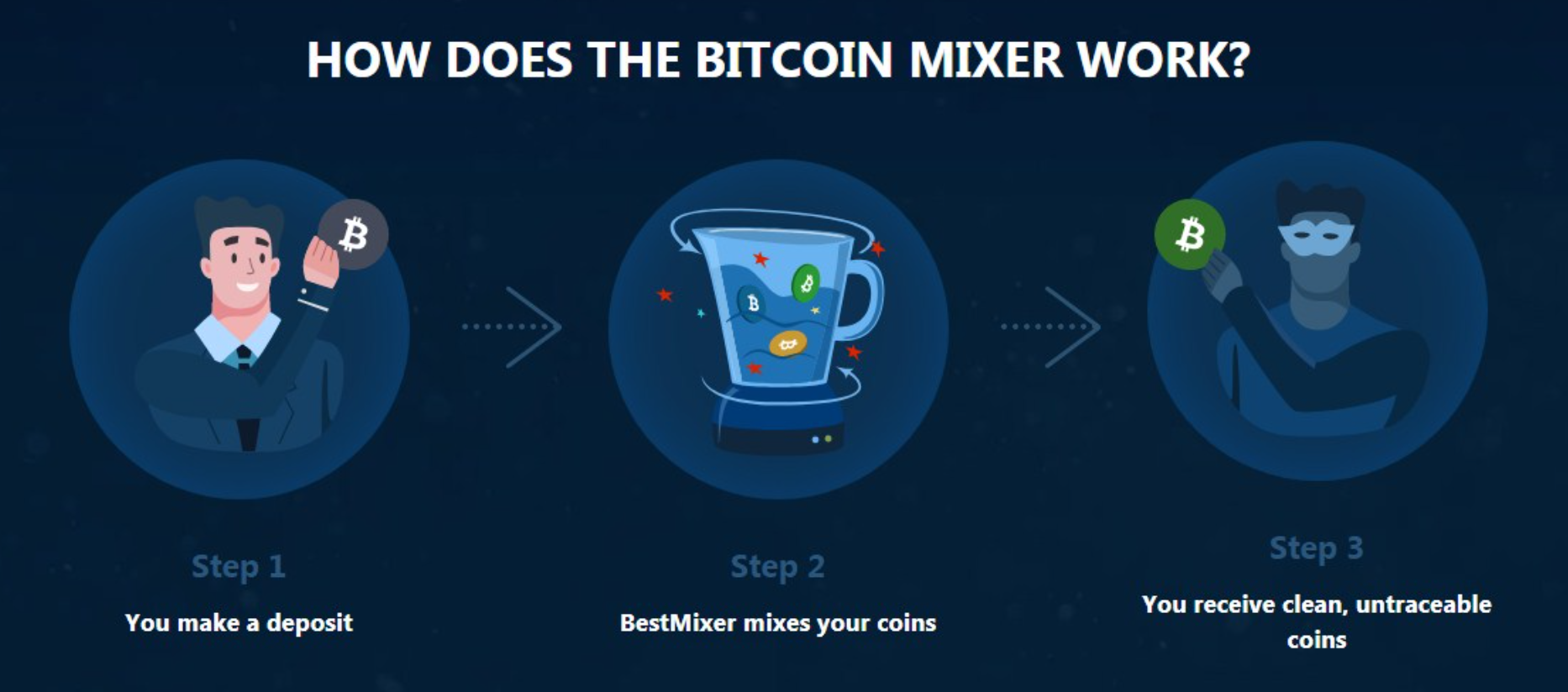
Three moves. The middle one is where the privacy comes from.

Step-by-step diagram of the Bitcoin mixing process, from deposit to mixed output
fig.03 · the Bitcoin mixing process, end to end
01

You send in

You deposit BTC to an address the Btc mixer provides — or, in CoinJoin, you signal your wallet wants to join the next round. That's it from your side at the start.

02

The pool mixes

Your coins join everyone else's in the same batch. The bigger the pool and the closer everyone's amounts, the harder it is for chain analysis to match any specific input to any specific output.

03

You get fresh coins

After a delay — minutes, hours, sometimes randomized — the same amount minus a fee lands at whatever address you specified. The chain trail from your original wallet stops at the Bitcoin mixer.

03

Custodial vs non-custodial BTC mixers

Two very different bets on who you trust.

Custodial

You hand over the coins

You send your BTC to the operator's address. They hold it. They send fresh coins back to you. A custodial BTC mixer is simple to use, usually fast, often with adjustable delays and output-splitting options.

The trade-off is plain: for the time your coins are with the service, you're trusting a single party not to disappear, not to get hacked, and not to get raided. Most of the mixer takedowns and operator prosecutions in the last several years have hit custodial services specifically.

  • + Easy, fast, minimal technical setup
  • + Tunable delays and split outputs
  • Counterparty risk for the duration of the mix
  • Higher regulatory exposure for operators and users
CoinJoin · non-custodial

Nobody holds your coins

A non-custodial Bitcoin mixer like Wasabi Wallet or JoinMarket coordinates a single transaction where many users contribute inputs and receive outputs. Everyone signs together. No middleman ever takes custody.

The privacy you get scales with how many participants the round has and how uniform their amounts are. CoinJoin is slower to learn and you're responsible for your own operational security, but you remove the "what if the operator exits" question entirely.

  • + No counterparty holds your BTC
  • + Open-source, auditable protocol
  • Higher learning curve
  • Privacy depends on round participation and discipline
Example of a BTC mixer transaction breaking the link between sender and receiver addresses
fig.04 · how a Bitcoin mixer breaks the on-chain trail between addresses
04

Why use a BTC mixer?

The reasons people reach for one are mostly boring and mostly reasonable.

i.

Salary privacy

The minute someone knows one of your addresses, they can see every payment that wallet has ever received. Your employer doesn't need to broadcast what you earn to anyone who saved your address from a Twitter bio in 2019.

ii.

Business confidentiality

A supplier shouldn't be able to see exactly which other clients you have and what you pay them. Treating an on-chain wallet like an open spreadsheet of your accounts payable is a strange way to run a business.

iii.

Personal safety

People who hold real amounts of BTC become targets — for phishing, social engineering, and in worse cases, physical attacks. Visibility makes targeting easier. Quiet wallets get bothered less.

iv.

Journalism and donations

In some countries, taking a Bitcoin donation that's publicly tied to your wallet is genuinely dangerous for the recipient. Privacy here isn't a vibe, it's a safety mechanism.

06

How to choose a Bitcoin mixer

A short checklist that should narrow the field quickly.

Comparison of Bitcoin mixer services showing fees, processing time, and features
fig.05 · comparing Bitcoin mixers across fees, speed, and features
07

Bitcoin mixer FAQ

The questions people actually type into the search bar.

Are Bitcoin mixers legal?

Depends entirely on your country and the specific service. Some mixers have been sanctioned. Some are open-source software anyone can run and use. The activity of mixing itself isn't illegal in most places — running a mixer as a business or using one to launder proceeds of crime is a separate question with very different answers. If you're not sure where your situation falls, talk to a local lawyer who works on crypto. This page can't answer that for you.

Will my exchange accept coins that went through a mixer?

Often not, or not without questions. Most major exchanges use chain analysis vendors that flag deposits with addresses linked to known mixers. The realistic outcomes are: deposit processed normally, deposit processed but you get a compliance request, deposit frozen pending review, account closed. Which one happens depends on the exchange, the country, and the specific mixer.

What's the difference between a tumbler and a mixer?

Same thing, different decade. "Tumbler" is older slang from earlier Bitcoin culture. "Mixer" is more common now. If a service calls itself a tumbler in 2026, that's a stylistic choice, not a different product category.

Is CoinJoin the same as a mixer?

CoinJoin is a type of mixing — coordinated and non-custodial at the protocol level. The privacy result rhymes with a custodial mixer, but you never hand your coins to a third party. The trust model is fundamentally different, even if the on-chain footprint looks similar to an outside observer.

How long does mixing take?

Custodial services usually let you set a delay anywhere from a few minutes to a day or more. CoinJoin rounds happen on a schedule that depends on how many users are participating at the time. Generally, faster equals weaker privacy — the random delays exist for a reason.

Does mixing make me anonymous?

Not really, and anyone telling you it does is selling something. It breaks a direct on-chain link between sender and receiver, which is a real and meaningful privacy improvement. But anonymity is a property of the whole picture — addresses, wallet software, network metadata, KYC history, your own habits. Mix carefully then post the receiving address publicly the next day and you've undone most of the work.

What's a UTXO and why does it keep coming up?

UTXO stands for "unspent transaction output." Bitcoin doesn't really have account balances internally — it has a pile of UTXOs that your wallet groups together to show you a total. Mixing operates on UTXOs: it takes some of yours, combines them with others', and gives you back fresh ones. Whether your new UTXOs are "clean" depends almost entirely on how the mixing actually went and who else was in the pool with you.